
Navigating Africa’s Digital Future Together
KEVIN MURIMI
3/8/20266 min read
Digital hubs
Digital Africa April 2026 · Special Report
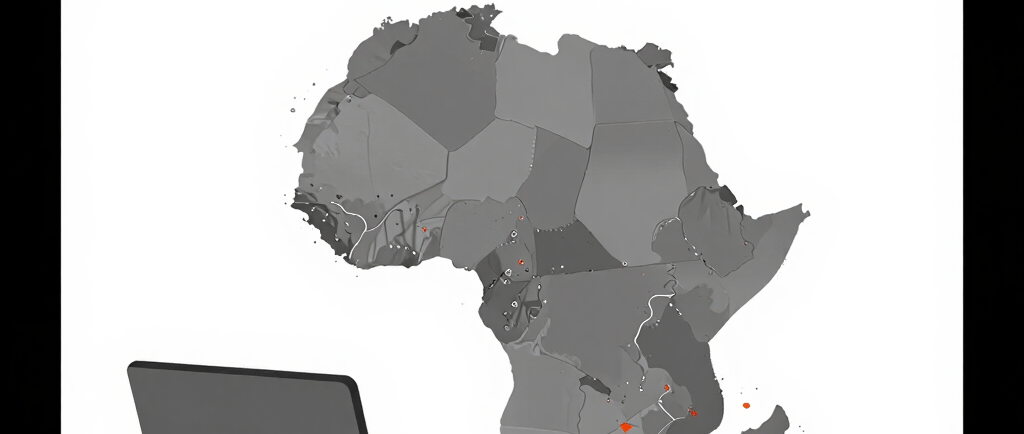
Connected — But Not Yet Free
Africa's digital future is not a destination to be reached. It is a set of choices being made right now — about who gets access, who owns the infrastructure, and who actually benefits from going online.
38%of Africa's population online vs. 68% global average
31% vs 43%Women vs. men connected — a gap that has barely moved
5.7%of monthly income spent on just 1GB of data
230MAfrican jobs will require digital skills by 2030
There is a hospital in Gabon where the patient register is still written by hand. Nurses flip through paper ledgers, and entire patient histories can disappear when a page tears. Down the road, a government minister is announcing an AI-powered healthcare platform. Both things are true simultaneously — and that gap is the essential fact of Africa's digital moment in 2026. The continent is not simply "behind." It is split: between cities and villages, between connected and excluded, between those who will shape the digital economy and those who will be shaped by it.
The triumphant narrative writes itself easily. Africa has over a billion mobile subscribers. Fintech has transformed payments from Dakar to Nairobi. Startup investment surpassed $700 million in a single quarter. But the continent has learned, through repeated experience, that headline numbers and lived reality are different things. Only 38 percent of Africans use the internet at all — well below the global average of 68 percent. Rural broadband infrastructure covers just 30 percent of Sub-Saharan Africa's land mass and under 10 percent of rural areas specifically. In some regions, power outages disrupt internet service for up to 200 days a year. These are not background conditions. They are the story.
The cost problem nobody wants to talk about
Mobile technology has indeed changed Africa. But access is not the same as affordability, and affordability is not the same as meaningful use. Africans pay more for mobile data than people in any other region of the world. In Zimbabwe, one gigabyte of data costs an average of $43.75 — compared to two cents in Israel. Across the continent, a single gigabyte consumes 5.7 percent of an average monthly income. For the millions of Africans living on less than that average, the choice between data and food is not a metaphor. It is a daily calculation.
The consequences flow directly into the labour market. The International Finance Corporation estimates that 230 million African jobs will require digital skills by 2030. Meanwhile, only 10 to 15 percent of African youth currently receive any structured digital training. In Nigeria — Africa's most populous country — 78 percent of young people lack essential digital skills despite the country having a 50 percent digital literacy rate that sounds far more encouraging than the reality behind it. Youth already account for 60 percent of the continent's unemployed. Without a serious reorientation of how digital skills are taught and funded, the digital economy will create winners among the already-connected — and deepen the exclusion of everyone else.
"Connectivity alone does not guarantee participation. Millions of young Africans are online — but locked out of the digital economy's real value."
The gender gap that isn't closing
The original document mentioned women's digital exclusion in a single polite paragraph. The data deserves more than that. Across Africa, 31 percent of women use the internet compared to 43 percent of men — a gap that surveys show has remained virtually unchanged for years, even as overall access has grown. In the Republic of the Congo, the gap between men and women with internet access exceeds 20 percentage points. In Ghana, Nigeria, and Senegal, it sits at 15 points or more. Women gain access at roughly the same pace as men — which means the divide compounds rather than closes.
Why the gap persists
Women have less disposable income for data and devices. In single-device households, men typically control the phone. Cultural norms restrict many women's digital participation in rural communities — one Nigerian participant described it plainly: "due to our position as mothers, we are always in the farm or market. We do not have time like men to be pressing phones." These are structural conditions, not individual failures.
What works
Kenya's Women Enterprise Fund and targeted digital infrastructure programmes have enabled measurable gains in mobile-based entrepreneurship. Nigeria's gender-focused skills programmes use mentorship, mobile learning, and local language resources to reach rural women. Both are underfunded relative to the scale of the problem. Scaling these interventions — not just mentioning them in strategy documents — is what determines whether the gender gap shrinks or solidifies.
The infrastructure question behind every other question
Digital transformation strategies across Africa share a common problem: they assume infrastructure that does not yet exist. Broadband coverage, for those living in rural areas, averages under five percent in Sub-Saharan Africa. While 85 percent of the continent's population lives within reach of a 3G signal, only 60 percent can access 4G — and in countries like Chad, Ethiopia, and Mauritania, 4G coverage reaches fewer than one in four people. Connecting Africa is not a software problem. It is a towers, cables, and power problem that no amount of digital policy frameworks can substitute for.
Electricity underpins everything. A school that receives a laptop donation cannot run it without power. A health clinic that adopts telemedicine cannot maintain it through daily outages. A rural entrepreneur who builds a micro-business on mobile payments depends on a grid that in many markets simply is not reliable. The countries making the most progress — Rwanda, Kenya, South Africa — are those that have treated energy and connectivity as foundational infrastructure, not optional upgrades to be addressed after "the digital economy" is established. The lesson is clear, and it is frequently ignored: you cannot skip the physical layer.
The education system's digital deficit
Over 60 percent of Nigeria's primary school teachers lack digital proficiency. Rural schools across South Africa routinely lack computer labs and reliable internet. A Kenyan student who grew up without ever seeing a computer described the shame of not knowing how to shut one down at high school — and went on to become a digital trainer to prevent others facing the same gap. These are not edge cases. They describe the majority experience of schooling across the continent, in a generation that will be asked to compete in a digital labour market by 2030.
Private sector investment — and who it actually serves
When global tech companies announce Africa initiatives, the press releases are invariably framed around inclusion. The reality is more complicated. Google, Microsoft, and Meta have made genuine investments in subsea cables, cloud infrastructure, and skills programmes across Africa. Google's Digital Skills for Africa Programme has trained more than 10 million people. These contributions are real. But they are also commercially rational: Africa is one of the fastest-growing consumer markets in the world, and the companies that build familiarity with their platforms now will harvest that loyalty for decades. Investment in African digital infrastructure is not philanthropy. It is strategy — and it should be evaluated as such.
Local startups are building something different. They are not entering the market from the outside; they are inside the problems they are solving. They are building agricultural finance tools for farmers who have never had a bank account, AI assistants for engineers working without stable power, language models that actually understand how Nigerians or Ghanaians speak. Their constraint is capital, not vision. Africa's ability to shape its own digital future depends on whether the financing ecosystem catches up to the quality of its founders — or whether the continent's best builders are forced to serve external investors' return expectations rather than local needs.
What a genuine digital future requires
The strategies have been written. The protocols have been negotiated. The investment announcements have been made. What remains — and what is consistently underestimated — is implementation. Forty-four African countries have data protection laws, but enforcement capacity is patchy. The AfCFTA Digital Trade Protocol exists, but requires domestic legal alignment across 54 jurisdictions. National AI strategies proliferate, while hospitals still use paper records and teachers still lack laptops.
The digital future Africa needs is not the one most often described. It does not begin with AI factories or hyperscale data centers — though those matter. It begins with a girl in a rural Tanzanian school getting reliable internet access and a teacher who knows how to use it. It begins with a woman in Lagos being able to afford data without choosing between connectivity and food. It begins with the recognition that the digital divide is not a technical problem awaiting a technical solution. It is a political and economic problem about who gets to participate, who controls the infrastructure, and who captures the value. Until those questions are answered honestly — in procurement decisions, in education budgets, in energy policy, in trade negotiations — the sunrise metaphors will keep outrunning the reality on the ground.
Digital InclusionGender GapDigital SkillsRural AccessData CostsYouth UnemploymentInfrastructureAfCFTAAI SovereigntyEducationNigeriaKenya